Multi-ethnic
San Juan Hill
About seven thousand families, most of them Black, Puerto Rican, or Afro-Caribbean, lost their homes when the Lincoln Square renewal project razed eighteen blocks for Lincoln Center and Fordham University between 1955 and 1966.
1955–1966
A neighborhood buried under a concert hall
On April 21, 1955, the New York City Board of Estimate approved the Lincoln Square Title I redevelopment plan at the recommendation of Robert Moses and the Mayor’s Committee on Slum Clearance.1 The plan designated eighteen blocks of the West Side for demolition. Within those eighteen blocks stood most of what New Yorkers called San Juan Hill, a neighborhood whose residents had built the densest Black community in Manhattan outside Harlem across the first half of the twentieth century, and whose blocks held a growing Puerto Rican and Afro-Caribbean population in the postwar years.23 The renewal project razed the tenements between 1957 and the mid-1960s. About seven thousand families lost their homes, and roughly eight hundred small businesses closed their doors.24
The replacement program turned the cleared blocks into a high-cultural campus. Lincoln Center for the Performing Arts rose on the northern half of the footprint, Fordham University opened a new Manhattan campus at the southern edge, and the Lincoln Towers apartment complex filled the western end with thirty-six hundred market-rate units.56 The West Side Urban Renewal Area, which followed a few years later, extended the logic northward to West Eighty-Seventh Street. The municipal housing authority had already cleared three blocks on the southern edge of San Juan Hill in the 1940s for the Amsterdam Houses public-housing project, removing another eleven hundred families, most of them African-American.78
The neighborhood’s former residents carried the written record of what stood on those blocks, and their children and grandchildren have brought it back into public view. The Centro de Estudios Puertorriqueños at Hunter College leads the recovery of the Puerto Rican record through its Afterlives of San Juan Hill project and its archive of Frank Espada’s Puerto Rican Diaspora photographs.910 The Schomburg Center and independent Black music historians have recovered the jazz record. Lincoln Center itself began, in 2022, a partial programmatic acknowledgment of the displacement through the Legacies of San Juan Hill series.1112 The essay below carries the documentary record of a large Black and Puerto Rican working-class neighborhood the city erased for concert halls, and it carries, with equal weight, the record of the community work that keeps the neighborhood’s history in public memory.
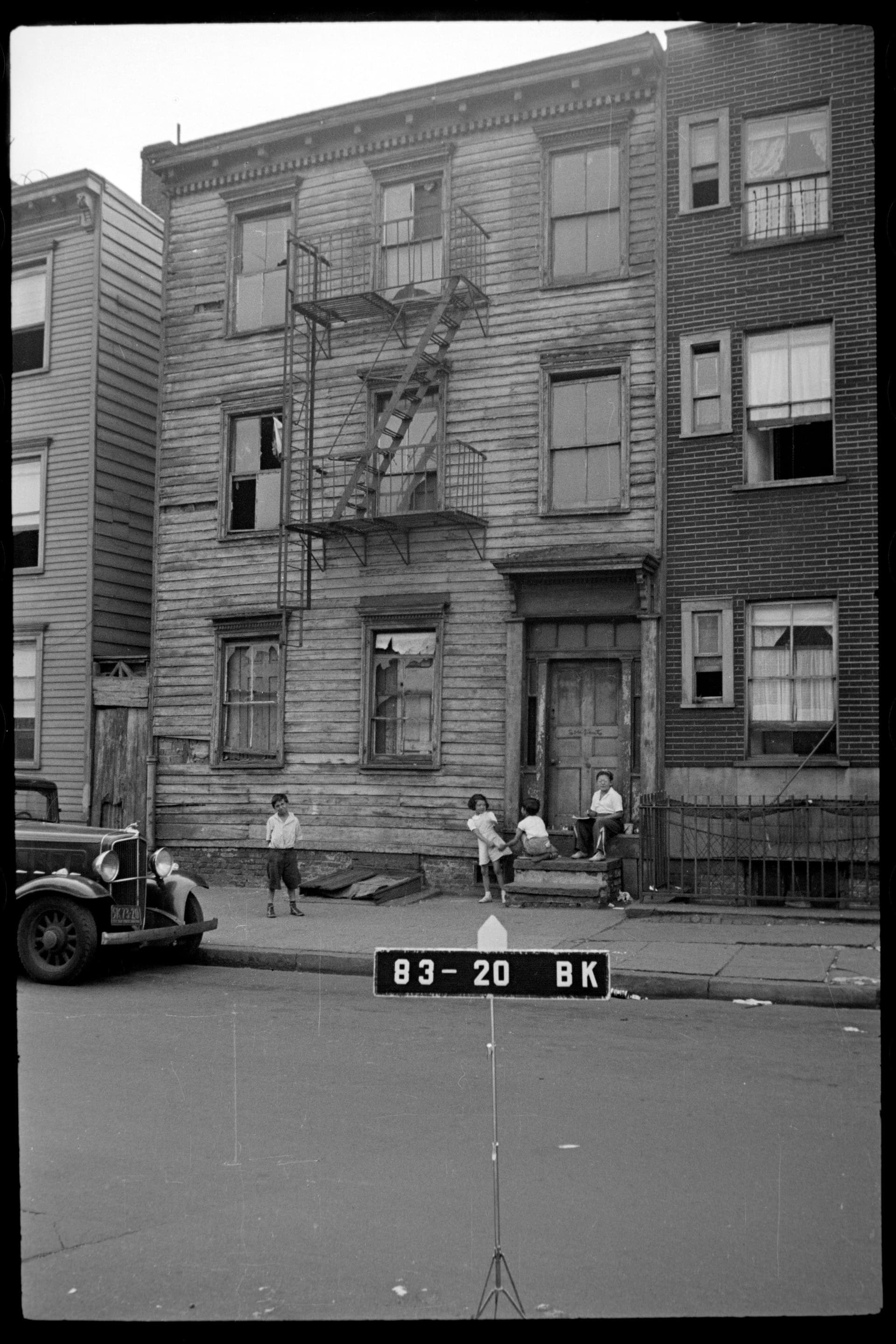
How the Hill got its name
Black New Yorkers began moving into the West Side tenements above West Fifty-Ninth Street in the last years of the nineteenth century, as landlords in the Tenderloin pushed Black tenants northward and as the Pennsylvania Railroad expansion displaced families from the old Little Africa blocks further south.313 The name San Juan Hill attached to the neighborhood in the early years of the twentieth century. Residents attributed the name to the Black veterans of the Spanish-American War who settled in the blocks after returning from Cuba, where soldiers of the United States Army’s Tenth Cavalry, the Buffalo Soldiers, had fought at the Battle of San Juan Hill in July of 1898.143 A second tradition holds that the name referred to the pitched street fights between Black residents and Irish-American gangs along the western slope of the blocks during the same period.2 Both explanations appear in the sources; the veterans’ account is the older and, by most historians’ reading, the more plausible origin.
The neighborhood ran along the West Side from West Fifty-Ninth Street north to roughly West Sixty-Fifth Street, between Amsterdam Avenue on the east and West End Avenue on the west.23 The blocks sat on a slight rise above the Hudson waterfront, from which the name also drew the word Hill. The density of the tenements was extraordinary even for Manhattan. A single block on West Sixty-Second Street housed close to five thousand people in the years before the First World War, more than lived in many upstate county seats.3 The social reformer Mary White Ovington, a founding member of the NAACP, wrote after her survey of the neighborhood that the tenements resembled human hives honeycombed with little rooms thick with human beings.3
The Phipps Houses, built between 1906 and 1911 by the philanthropist Henry Phipps for Black tenants, stood along West Sixty-Third and West Sixty-Fourth Streets as the neighborhood’s model tenement. The four Phipps buildings offered improved sanitation, interior ventilation, and on-site childcare rooms to roughly two thousand Black residents across their combined inventory.1516 The buildings were among the last of the pre-renewal structures the city demolished, and Thelonious Monk grew up in the Phipps complex at 243 West Sixty-Third Street.173
By the First World War, San Juan Hill held the largest Black population of any Manhattan neighborhood. The Great Migration and the northward expansion of Harlem pulled a substantial share of the Black residents uptown through the 1920s. The gap in the San Juan Hill tenements filled with Puerto Rican families whose arrival in New York had accelerated after the Jones Act of 1917 extended United States citizenship to residents of Puerto Rico. By the 1940s, the neighborhood held a growing Afro-Caribbean population from Barbados, Jamaica, and the Virgin Islands, along with its Black, Puerto Rican, Irish, and Italian residents. Federal and city censuses of the early 1950s placed the Black and Puerto Rican share of the population together at about a quarter of the neighborhood’s residents, sharing the blocks with Italian, Irish, German, and Greek working-class families.18
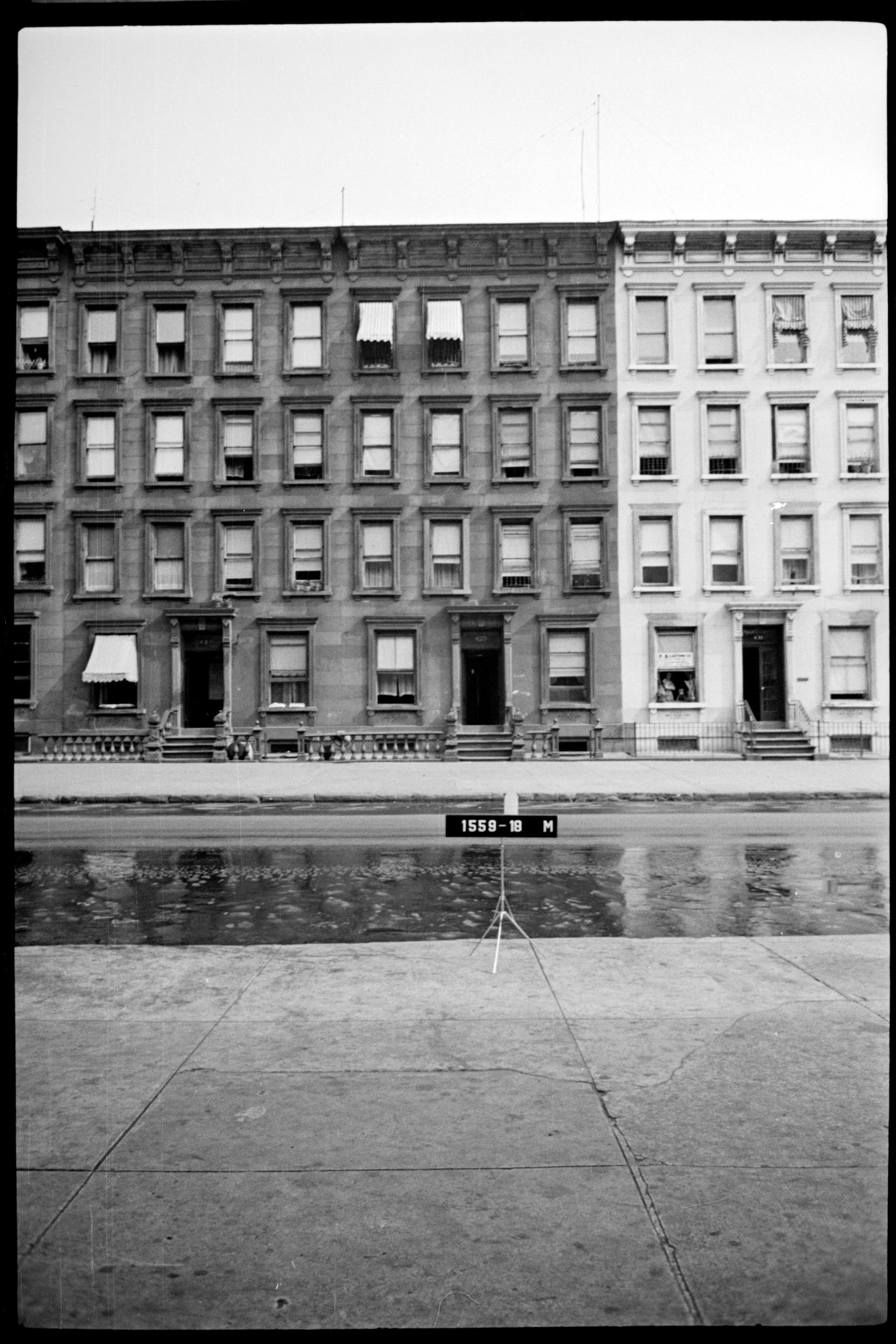
Jazz clubs, stride piano, and the sound of the neighborhood
The musical record of San Juan Hill runs from the stride piano era of the 1910s through the bebop years of the late 1940s. James P. Johnson, who composed the Charleston in 1923 and whose left hand defined stride piano as a form, lived and played in San Juan Hill through his early career.23 Johnson played the rent parties in the Phipps Houses and the basement clubs along West Sixty-Second and West Sixty-Third Streets, and by neighborhood tradition composed the Charleston for a San Juan Hill dance floor. Benny Carter grew up in the neighborhood and lived on West Sixty-Third Street as a young musician. Willie “The Lion” Smith, Luckey Roberts, and Eubie Blake passed through the neighborhood’s clubs through the 1920s. Thelonious Monk, who moved to the Phipps Houses with his family from North Carolina in 1922 at the age of four, spent his entire childhood and his first years as a working pianist in the neighborhood.17
The Jungle Cafe on West Sixty-Second Street, the basement clubs along Sixty-Third, and the Lincoln Arcade dance hall further south on Broadway formed a dense cluster of Black music venues through the 1920s and 1930s.2 The clubs drew the bebop generation through the 1940s, and Monk’s early sessions at Minton’s in Harlem carried, by his own account and the account of his bandmates, a rhythmic language he had developed at the San Juan Hill rent parties.
The Puerto Rican and Afro-Caribbean music scene in the neighborhood ran alongside and overlapped with the Black jazz scene. The community held social clubs, Pentecostal storefront churches, and the early venues of what Juan Flores, writing years later, identified as the New York Puerto Rican diasporic music tradition.19 The interplay between Black and Puerto Rican musicians in the neighborhood shaped the Latin jazz fusions of the 1940s and 1950s, a lineage Lincoln Center’s own recent Legacies of San Juan Hill programming has begun to document through commissioned works by Etienne Charles and others.11
The destruction of the jazz clubs between 1957 and 1962 went almost unrecorded in the mainstream press. The demolition crews did not photograph the clubs. The musicians dispersed. The Lincoln Square plan treated the buildings on the site as slum structures in which no cultural landscape was visible from City Hall, and the cultural legacy of the blocks survived in the oral record of the musicians and their children rather than in the public record of the city.
The Lincoln Square renewal project
The Lincoln Square plan ran through the institutional machinery Moses had built for Title I of the federal Housing Act of 1949. The statute allowed a local slum-clearance agency to acquire land through eminent domain at fair-market value, clear the site, and resell the parcel to a private redeveloper at a substantially reduced price, with the federal government paying two-thirds of the write-down.4 Moses chaired the Mayor’s Committee on Slum Clearance from its creation in 1948 and used the committee to designate more than a dozen Title I sites across the city through the 1950s.20 The Lincoln Square site, at about eighteen blocks, was one of the largest.
The first institutional sponsor of the Lincoln Square project was the Metropolitan Opera, which had been looking to move from its Thirty-Ninth Street house since the 1920s.5 Moses paired the Opera with the New York Philharmonic, which faced the demolition of Carnegie Hall, and assembled a consortium of performing-arts institutions under the leadership of John D. Rockefeller III. The consortium became Lincoln Center Inc. and occupied the northern six blocks of the Title I footprint. Fordham University, whose law school had committed to the site in 1955, took the blocks at the southern edge for a new Manhattan campus that eventually housed the law school, the graduate school of business, and a residence tower.16 The Lincoln Towers apartment complex, developed by William Zeckendorf and later by Webb and Knapp, took the western end and opened in phases between 1962 and 1965 with about thirty-six hundred market-rate units. The Power Memorial Academy parcel at the corner of West Sixty-First Street held a Catholic boys’ high school. Martin Luther King Jr. High School, a new public school, opened on the eastern edge in 1975, after the renewal-area demolitions had finished.
The Board of Estimate approved the plan on April 21, 1955. The Title I write-down transferred municipal land to the consortium at a fraction of the acquisition cost. The sponsors paid no property tax on the Lincoln Center parcel under the state’s cultural-institutions exemption. The public subsidy, measured across the federal write-down, the property-tax abatement, and the city’s construction bond issuance for the performing-arts buildings, ran into the hundreds of millions of 1960s dollars. Samuel Zipp’s Manhattan Projects, the authoritative scholarly account of the New York Title I program, puts Lincoln Square alongside Stuyvesant Town, the East Harlem housing projects, and the United Nations complex as one of the four iconic postwar renewal sites and traces the financial and political scaffolding of each.4
The relocation program for the residents the plan displaced ran as an administrative afterthought. The Committee on Slum Clearance did not survey the households on the site before designation. The relocation office the committee established handled the seven thousand families in roughly the manner of a clearinghouse and not in the manner of a social agency responsible for a community of that scale. Most displaced families received a small cash relocation payment, a list of vacancy advertisements in other parts of the city, and nothing else. Almost none of the relocated households could afford the rents in the Lincoln Towers buildings or in the postwar market housing of the West Side Urban Renewal Area north of Sixty-Sixth Street.2 Most of the displaced Black residents moved to Harlem or to the South Bronx. Most of the displaced Puerto Rican residents moved to East Harlem, the South Bronx, or Williamsburg. The Centro Afterlives project has documented the coercion and deception that ran through the relocation interviews the housing office conducted with Puerto Rican tenants; families frequently agreed to moves they did not understand and could not refuse.910
San Juan Hill ran along the West Side of Manhattan from West Sixtieth Street north to about West Sixty-Sixth Street, between Tenth Avenue and the waterfront rail yards. The blocks held the largest Black population in Manhattan outside Harlem, a substantial Puerto Rican and Afro-Caribbean community, and smaller Irish and Italian enclaves. Robert Moses and the Mayor's Committee on Slum Clearance designated the area a Title I redevelopment zone in 1955. Demolition ran from 1957 into the mid-1960s and removed about seven thousand families and eight hundred businesses to build Lincoln Center for the Performing Arts, a Fordham University campus, Martin Luther King Jr. High School, and the Lincoln Towers apartment complex. The map overlays the pre-clearance tenement grid, the Title I takings footprint, and the post-renewal superblocks.
The map shows San Juan Hill, pre-clearance, Lincoln Center for the Performing Arts, 1962 onward, Amsterdam Houses NYCHA, 1948 to present, Phipps Houses, demolished through 1960s, and Fordham University Lincoln Square campus.
- San Juan Hill, pre-clearance
- Lincoln Center for the Performing Arts, 1962 onward
- Amsterdam Houses NYCHA, 1948 to present
- Phipps Houses, demolished through 1960s
- Fordham University Lincoln Square campus
Approximate pre-clearance neighborhood, Centro de Estudios Puertorriqueños and NYC Municipal Archives.; Lincoln Center complex on the Title I clearance site.; NYCHA development, 1948 to present.; Phipps Houses model tenements, built 1906.; Fordham Manhattan campus on Lincoln Square renewal blocks..
The Board of Estimate decision in April of 1955 did not pass without opposition. A coalition of tenants, small-business owners, and civic-organization leaders formed a Lincoln Square Residents Committee within months of the designation and filed a federal lawsuit challenging the Title I write-down. The suit, Kaskel v. Impellitteri, reached the United States Supreme Court, which declined to hear it in 1957 and let the lower-court ruling stand.5 The Women’s City Club of New York issued a detailed relocation study in 1956 and 1957 that documented the inadequacy of the rehousing plan and called for a moratorium on clearance until the city produced a workable relocation program. The study drew press coverage and influenced the design of later renewal projects, but the Lincoln Square demolitions proceeded on schedule.2122 Harris L. Present, a lawyer who represented several of the displaced tenants, organized the legal challenge; Jane Jacobs, writing her first pieces on urban renewal in Architectural Forum at the same time, drew on the Lincoln Square resistance in her case against large-scale clearance.5
The resistance slowed the project by months rather than by years, and the scale of the plan overwhelmed the capacity of the local organizations to contest it block by block. The Lincoln Square experience nevertheless produced the organizing templates that the next generation of New York renewal fights, above all the Cooper Square campaign against Moses’s Lower East Side plan, later used to defeat demolition programs of comparable scale. The history of resistance in New York urban renewal runs from Lincoln Square through Cooper Square and into the anti-displacement organizing of the 1970s and 1980s; the San Juan Hill tenants lost their fight and, in losing it, taught the city’s housing movement how to win the next one.
The West Side Story soundstage, the Centro archive, and the return of the record
In August of 1960, the producers of the film adaptation of West Side Story shot several weeks of location footage on the cleared blocks of the Lincoln Square renewal site.23 The opening sequence, in which the Jets move across a flattened urban landscape and the camera rises through a partially demolished brownstone, used the West Sixty-Eighth Street and West Sixty-Ninth Street blocks of the site, which the demolition crews had cleared and which no sponsor had yet rebuilt. The directors, Robert Wise and Jerome Robbins, used the ruins as an outdoor soundstage. The Jets danced on the packed dirt of the cleared lots. The camera framed the dance numbers against the jagged edges of the demolished tenements.
The San Juan Hill that the film’s setting referenced had stood on those blocks six months earlier. The Jets’ Polish-American and Irish-American characters and the Sharks’ Puerto Rican characters corresponded, with Broadway adjustments, to the actual ethnic composition of the neighborhood the crews had just demolished. The Puerto Rican residents of San Juan Hill whom the city had evicted for the Lincoln Square project were, in a literal sense, the people the film’s Sharks represented. Few of the residents saw the film. The stereotypes the 1961 production built into the Sharks’ characterization, particularly Natalie Wood’s performance as Maria and the brownface makeup applied to several of the Anglo cast members playing Puerto Rican roles, drew Puerto Rican criticism from the moment of release.24
Steven Spielberg’s 2021 adaptation attempted a partial reckoning with the history. Spielberg shot the film’s opening sequence among the demolished blocks of an analogous clearance site, with a sign reading Property Purchased by New York City for Slum Clearance visible in the frame, and placed the action explicitly within the period of the Lincoln Square demolitions.25 The production consulted with the historian Virginia Sánchez-Korrol on Puerto Rican New York history and cast Latina actresses, including the Afro-Boricua Rachel Zegler, in the Puerto Rican roles the 1961 film had assigned to Anglo actresses in brownface. The 2021 film’s opening frames carry the physical logic of the Lincoln Square demolitions in a way the 1961 film obscured. The two adaptations, taken together, form an odd double record of the neighborhood: the 1961 film used the actual ruins of San Juan Hill as its set and largely hid the history those ruins carried, and the 2021 film recreated the ruins at a different site to render the history the original film had buried.
Centro de Estudios Puertorriqueños at Hunter College launched the Afterlives of San Juan Hill project in 2023 after roughly eighteen months of archival work on material Lincoln Center had released from its institutional holdings.9 The project’s research team reviewed more than two thousand archival records Lincoln Center transferred to the Centro Data Hub, along with oral histories Centro collected from surviving displaced Puerto Rican residents and their descendants. The project produced a digital exhibition, a physical exhibition at the Manhattan Borough President’s office, and a public-facing data tool that maps the former addresses of Puerto Rican families against the Title I clearance boundaries.2627 The project frames the displacement not as a one-time event in the 1950s but as an ongoing process, an afterlife, whose consequences ran through the subsequent generations of the displaced families and into the current distribution of Puerto Rican New York.
The Afterlives project works in direct collaboration with Jason Espada, the son of the photographer Frank Espada, who conducted oral-history interviews across Puerto Rican New York in the 1970s and 1980s for the Puerto Rican Diaspora photo-documentary. Espada photographed displaced San Juan Hill families in their subsequent homes in East Harlem, the South Bronx, and Williamsburg and recorded their accounts of the eviction years. The Centro exhibition pairs the photographs with the audio interviews, and the project treats Espada’s documentary work as the anchoring primary record of the neighborhood’s Puerto Rican community.10
The Schomburg Center for Research in Black Culture, the New York Public Library’s research division for Black cultural history, has carried the Black musical record of San Juan Hill in its audio archives and its digital collections for decades. The Schomburg’s oral histories with James P. Johnson’s contemporaries, with members of the Monk family, and with Harlem Renaissance musicians who had passed through San Juan Hill form a durable record of the stride-piano and bebop years.28 Lincoln Center’s 2022 Legacies of San Juan Hill programming brought the Schomburg and the Centro into formal partnership around the neighborhood’s history for the first time.11
The documentary work of Stanley Nelson and his production company, Firelight Media, produced the feature-length documentary San Juan Hill: Manhattan’s Lost Neighborhood, which premiered at Lincoln Center in October of 2024.29 The film carries interviews with surviving displaced residents, archival footage of the demolitions, and the musical record the Centro and the Schomburg have recovered. Firelight’s film is the most widely distributed account of the neighborhood’s destruction to reach a general audience.
The accumulating archive runs deeper than any single institution. The New York City Municipal Archives 1940s Tax Department photographs, one of the most thoroughly digitized municipal archival collections in the United States, carry a facade photograph of every building that stood in San Juan Hill in 1940.30 The NYC Municipal Archives Department of Housing Preservation and Development image collection holds the Committee on Slum Clearance photographs of the site from the 1950s, which the committee staff took to document the buildings’ deterioration and to justify the designation.31 The Fordham University Lincoln Square Oral History Project, a student-led initiative at the Fordham Urban Studies program, has collected oral histories from former residents of the neighborhood in recent years.32 The West End Museum has published a comprehensive narrative account of the Lincoln Center displacement.33
Lincoln Center’s own acknowledgment has moved from programming into the institutional record only slowly. The Legacies of San Juan Hill series in 2022 produced the first substantial institutional statement on the displacement in the sixty-plus years since the renewal began.1112 The acknowledgment remains partial; the institution has not offered material restitution to the displaced families or their descendants, and the Legacies programming operates as an educational and cultural series rather than as a reparations program. The Centro Afterlives project frames the institutional acknowledgment as a first step rather than as a conclusion, and its ongoing oral-history collection continues to build the record the displaced community will use to press further claims.
What the blocks hold now
The Lincoln Center campus, the Fordham Manhattan campus, the Lincoln Towers apartment complex, the Amsterdam Houses to the south, and Martin Luther King Jr. High School together cover the eighteen-block footprint of the Lincoln Square renewal area in 2026. Almost nothing of the physical San Juan Hill survives on the blocks themselves. A single Phipps Houses building, Phipps No. 3 on West Sixty-Fourth Street, stood into the 1960s after the renewal demolitions; the building has since gone as well. The Amsterdam Houses from the 1948 clearance remain and continue to house a substantial Black and Puerto Rican population, whose residents include descendants of the families the 1940s and 1950s displacements sent further north and east.
The recovery of the record remains active work. The Centro Afterlives project continues to collect oral histories. The Schomburg expands its digital holdings year by year. The Fordham Lincoln Square Oral History Project trains a new cohort of student interviewers each semester. Firelight’s documentary circulates through public-television stations and film-festival screenings. Etienne Charles’s commissioned work for the New York Philharmonic, San Juan Hill: A New York Story, premiered at Lincoln Center in September of 2022 and has toured since.11 The Black Lives Matter and Puerto Rican cultural-policy movements have carried San Juan Hill into contemporary debate about cultural-institution accountability and reparative programming.
The neighborhood is not coming back. The buildings are gone. No one will rebuild the jazz clubs, the bodegas, the Pentecostal storefronts, or the rent-party apartments along West Sixty-Second and West Sixty-Third Streets. The families the city displaced in the 1950s and their descendants have built new lives in new boroughs, and their children are not moving back to an Upper West Side in which a market-rate studio apartment rents for three thousand dollars a month. What remains recoverable is the record: the archive, the oral history, the photographs, the music, and the institutional acknowledgment. The record is in the hands of the displaced community and the researchers who work with it. The condition of possibility for any deeper reparative work by Lincoln Center, by the city, or by the federal government runs through the archive the Centro, the Schomburg, and the Fordham program continue to build. The record is incomplete, the documentation uneven, and the institutional will to act on the record still modest. The work is underway, and the communities who carry it are not finished.
Footnotes
-
Esri StoryMaps, “Lincoln Square Renewal Project (New York, 1955-1969).” https://storymaps.arcgis.com/stories/d6c942630bee454bae0c7b459a081f07 ↩ ↩2
-
“San Juan Hill, Manhattan,” Wikipedia. https://en.wikipedia.org/wiki/San_Juan_Hill,_Manhattan ↩ ↩2 ↩3 ↩4 ↩5 ↩6 ↩7
-
BlackPast, “San Juan Hill, New York City (ca. 1895-1940).” https://blackpast.org/african-american-history/san-juan-hill-new-york-city-ca-1895-1940/ ↩ ↩2 ↩3 ↩4 ↩5 ↩6 ↩7 ↩8
-
Samuel Zipp, Manhattan Projects: The Rise and Fall of Urban Renewal in Cold War New York, Oxford University Press, 2010. ↩ ↩2 ↩3
-
Kate Fermoile, “‘The scythe of progress must move northward’: Urban Renewal on the Upper West Side,” Urban Omnibus, June 2015. https://urbanomnibus.net/2015/06/the-scythe-of-progress-must-move-northward-urban-renewal-on-the-upper-west-side/ ↩ ↩2 ↩3 ↩4
-
“Lincoln Center,” Wikipedia. https://en.wikipedia.org/wiki/Lincoln_Center ↩ ↩2
-
LandmarkWest, “Amsterdam Houses.” https://www.landmarkwest.org/sjh/amsterdam-houses/ ↩
-
“Amsterdam Houses,” Wikipedia. https://en.wikipedia.org/wiki/Amsterdam_Houses ↩
-
Centro de Estudios Puertorriqueños, Hunter College, “Afterlives of San Juan Hill.” https://centropr.hunter.cuny.edu/tools/afterlives-of-san-juan-hill/ ↩ ↩2 ↩3
-
Amsterdam News, “CENTRO artists present Puerto Rico’s diaspora and its displacement in NYC,” June 5, 2025. https://amsterdamnews.com/news/2025/06/05/centro-artists-present-puerto-ricos-diaspora-and-its-displacement-in-nyc/ ↩ ↩2 ↩3
-
Lincoln Center for the Performing Arts, “Legacies of San Juan Hill.” https://www.lincolncenter.org/feature/legacies-of-san-juan-hill/ ↩ ↩2 ↩3 ↩4 ↩5
-
Neda Ulaby, “Lincoln Center revisits the painful history of San Juan Hill,” NPR, October 7, 2022. https://www.npr.org/2022/10/07/1126189129/san-juan-hill-lincoln-center ↩ ↩2
-
“San Juan Hill,” The New Negro Before Harlem, CUNY Graduate Center Commons. https://thenewnegronyc.commons.gc.cuny.edu/san-juan-hill/ ↩
-
“A Perfect Hailstorm of Bullets: A Black Sergeant Remembers the Battle of San Juan Hill in 1899,” History Matters, George Mason University. https://historymatters.gmu.edu/d/100/ ↩
-
LandmarkWest, “Phipps Houses No. 2.” https://www.landmarkwest.org/sjh/phipps-houses-no-2/ ↩
-
LandmarkWest, “Phipps Houses No. 3.” https://www.landmarkwest.org/sjh/phipps-houses-no-3/ ↩
-
“Thelonious Monk,” Wikipedia. https://en.wikipedia.org/wiki/Thelonious_Monk ↩ ↩2
-
“Lincoln Square, Manhattan,” Wikipedia. https://en.wikipedia.org/wiki/Lincoln_Square,_Manhattan ↩
-
Juan Flores, The Diaspora Strikes Back: Caribeño Tales of Learning and Turning, Routledge, 2009. ↩
-
Hilary Ballon and Kenneth T. Jackson, eds., Robert Moses and the Modern City: The Transformation of New York, W. W. Norton, 2007. ↩
-
Women Creating Change, “History.” https://wccny.org/about-wcc/history/ ↩
-
Samuel Zipp, “The battle of Lincoln Square: Neighbourhood culture and the rise of resistance to urban renewal,” Planning Perspectives, Vol. 24, No. 4, 2009. https://www.tandfonline.com/doi/abs/10.1080/02665430903145655 ↩
-
Lincoln Center for the Performing Arts, “The Ground Beneath West Side Story.” https://www.lincolncenter.org/article/the-ground-beneath-lessemgreaterwest-side-storylessemgreater ↩
-
“West Side Story (1961 film),” Wikipedia. https://en.wikipedia.org/wiki/West_Side_Story_(1961_film) ↩
-
Nicole Acevedo, “Spielberg ditches the brownface in a West Side Story remake that centers Puerto Ricans,” NBC News, December 10, 2021. https://www.nbcnews.com/news/latino/spielbergs-west-side-story-brings-deeper-focus-puerto-rican-experience-rcna8029 ↩
-
Office of the Manhattan Borough President, “Afterlives of San Juan Hill: Lincoln Square / San Juan Hill Exhibition Opening.” https://www.manhattanbp.nyc.gov/events/afterlives-of-san-juan-hill-lincoln-square-san-juan-hill-exhibition-opening/ ↩
-
Hunter College, “Afterlives of San Juan Hill: Lincoln Square / San Juan Hill Exhibition.” https://hunter.cuny.edu/event/afterlives-of-san-juan-hill-lincoln-square-san-juan-hill-exhibition/ ↩
-
Schomburg Center for Research in Black Culture, New York Public Library, Collections. https://www.nypl.org/locations/schomburg ↩
-
Lisa Kava, “Stanley Nelson’s San Juan Hill: Manhattan’s Lost Neighborhood Premieres at Lincoln Center on Oct. 9,” West Side Rag, September 3, 2024. https://www.westsiderag.com/2024/09/03/stanley-nelsons-san-juan-hill-manhattans-lost-neighborhood-premieres-at-lincoln-center-on-oct-9 ↩
-
New York City Municipal Archives, “1940s Tax Department photographs.” https://a860-collectionguides.nyc.gov/repositories/2/resources/64 ↩
-
New York City Municipal Archives, “Department of Housing Preservation and Development image collection.” https://a860-collectionguides.nyc.gov/repositories/2/resources/102 ↩
-
Fordham University, “Lincoln Square Oral History Project.” https://research.library.fordham.edu/lincolnsquare/ ↩
-
The West End Museum, “The Lincoln Center and Narrative Control.” https://thewestendmuseum.org/history/topic/politics-law/the-lincoln-center-and-narrative-control/ ↩
Sources
Samuel Zipp. (2010). "Manhattan Projects: The Rise and Fall of Urban Renewal in Cold War New York". New York: Oxford University Press.
https://global.oup.com/academic/product/manhattan-projects-9780199874057Authoritative scholarly account of the New York Title I program; chapter on Lincoln Square treats the project as one of the four iconic postwar renewal sites alongside Stuyvesant Town, East Harlem housing, and the United Nations complex.
(2007). "Robert Moses and the Modern City: The Transformation of New York". New York: W. W. Norton.
https://wwnorton.com/books/Robert-Moses-and-the-Modern-CityCompanion volume to the 2007 three-venue exhibition; contains essays on the Title I program and a comprehensive catalog of Moses projects.
Juan Flores. (2009). "The Diaspora Strikes Back: Caribeño Tales of Learning and Turning". New York: Routledge.
https://www.routledge.com/The-Diaspora-Strikes-Back-Caribeno-Tales-of-Learning-and-Turning/Flores/p/book/9780415957601Framing of the New York Puerto Rican diasporic music tradition and the cultural interchange between Black and Puerto Rican New York.
Samuel Zipp. (2009). "The battle of Lincoln Square: Neighbourhood culture and the rise of resistance to urban renewal". Planning Perspectives.
https://www.tandfonline.com/doi/abs/10.1080/02665430903145655Peer-reviewed account of the organized tenant and merchant resistance to the Lincoln Square clearance between 1956 and 1959.
Centro de Estudios Puertorriqueños. (2023). "Afterlives of San Juan Hill".
https://centropr.hunter.cuny.edu/tools/afterlives-of-san-juan-hill/Digital exhibition and oral-history project led by the Centro Data Hub at Hunter College, drawing on more than two thousand archival records released by Lincoln Center.
Lincoln Center for the Performing Arts. (2022). "Legacies of San Juan Hill".
https://www.lincolncenter.org/feature/legacies-of-san-juan-hill/Institutional acknowledgment initiative launched in fall of 2022 in partnership with Centro and the Schomburg Center; includes the Etienne Charles commission and the Sounds of San Juan Hill premiere.
Neda Ulaby. (2022). "Lincoln Center revisits the painful history of San Juan Hill".
https://www.npr.org/2022/10/07/1126189129/san-juan-hill-lincoln-centerNPR coverage of the Legacies of San Juan Hill programming, October 7, 2022.
Wikipedia contributors. (2026). "San Juan Hill, Manhattan".
https://en.wikipedia.org/wiki/San_Juan_Hill,_ManhattanReference article summarizing neighborhood boundaries, name-origin traditions, displacement totals, and cultural history.
Wikipedia contributors. (2026). "Lincoln Square, Manhattan".
https://en.wikipedia.org/wiki/Lincoln_Square,_ManhattanReference article on the postwar neighborhood, including racial composition estimates for the 1950s.
Wikipedia contributors. (2026). "Thelonious Monk".
https://en.wikipedia.org/wiki/Thelonious_MonkBiographical entry confirming Monk's childhood address at Phipps Houses, 243 West Sixty-Third Street.
Wikipedia contributors. (2026). "West Side Story (1961 film)".
https://en.wikipedia.org/wiki/West_Side_Story_(1961_film)Reference entry on the 1961 film, its Lincoln Square location shoot, and the brownface controversy.
Wikipedia contributors. (2026). "Lincoln Center".
https://en.wikipedia.org/wiki/Lincoln_CenterInstitutional history of Lincoln Center for the Performing Arts and the Lincoln Square renewal area.
BlackPast. "San Juan Hill, New York City (ca. 1895-1940)".
https://blackpast.org/african-american-history/san-juan-hill-new-york-city-ca-1895-1940/Encyclopedia entry on the Black history of San Juan Hill, including the Mary White Ovington tenement-density characterization and the James P. Johnson and Monk connections.
CUNY Graduate Center Commons. "San Juan Hill".
https://thenewnegronyc.commons.gc.cuny.edu/san-juan-hill/The New Negro Before Harlem digital project account of San Juan Hill's Black intellectual and musical history before the Great Migration.
Presley Holliday. (1899). "A Perfect Hailstorm of Bullets: A Black Sergeant Remembers the Battle of San Juan Hill in 1899".
https://historymatters.gmu.edu/d/100/Primary-source letter from a Black noncommissioned officer of the Tenth Cavalry recording the Buffalo Soldiers' role at the Battle of San Juan Hill; hosted by History Matters at George Mason University.
LandmarkWest. "Phipps Houses No. 2".
https://www.landmarkwest.org/sjh/phipps-houses-no-2/Architectural and social history of the model tenement building Henry Phipps built for Black tenants at 235-247 West Sixty-Third Street, completed 1906.
LandmarkWest. "Phipps Houses No. 3".
https://www.landmarkwest.org/sjh/phipps-houses-no-3/Companion entry on Phipps Houses No. 3, one of the last pre-renewal structures to survive the Lincoln Square demolitions.
LandmarkWest. "Amsterdam Houses".
https://www.landmarkwest.org/sjh/amsterdam-houses/History of the 1948 Amsterdam Houses public-housing project and the 1940s clearance that displaced more than eleven hundred families from the southern edge of San Juan Hill.
Wikipedia contributors. (2026). "Amsterdam Houses".
https://en.wikipedia.org/wiki/Amsterdam_HousesReference article on the New York City Housing Authority development, including figures on displaced residents during pre-war clearance.
Esri StoryMaps. "Lincoln Square Renewal Project (New York, 1955-1969)".
https://storymaps.arcgis.com/stories/d6c942630bee454bae0c7b459a081f07Mapped chronology of the Lincoln Square Title I designation, Board of Estimate approval, and clearance phases.
Kate Fermoile. (2015). "The scythe of progress must move northward: Urban Renewal on the Upper West Side".
https://urbanomnibus.net/2015/06/the-scythe-of-progress-must-move-northward-urban-renewal-on-the-upper-west-side/Urban Omnibus essay on the Lincoln Square project and the West Side Urban Renewal Area, including the Kaskel v. Impellitteri litigation and the early Jane Jacobs critique.
Women Creating Change. "History".
https://wccny.org/about-wcc/history/Organizational history of the Women's City Club of New York, whose mid-1950s relocation study documented the inadequacy of the Lincoln Square rehousing plan.
Office of the Manhattan Borough President. "Afterlives of San Juan Hill: Lincoln Square / San Juan Hill Exhibition Opening".
https://www.manhattanbp.nyc.gov/events/afterlives-of-san-juan-hill-lincoln-square-san-juan-hill-exhibition-opening/Event page for the physical exhibition of the Centro Afterlives project at the Manhattan Borough President's office.
Hunter College. "Afterlives of San Juan Hill: Lincoln Square / San Juan Hill Exhibition".
https://hunter.cuny.edu/event/afterlives-of-san-juan-hill-lincoln-square-san-juan-hill-exhibition/Hunter College event listing for the Afterlives of San Juan Hill exhibition.
New York Amsterdam News. (2025). "CENTRO artists present Puerto Rico's diaspora and its displacement in NYC".
https://amsterdamnews.com/news/2025/06/05/centro-artists-present-puerto-ricos-diaspora-and-its-displacement-in-nyc/Amsterdam News coverage of the Centro Afterlives exhibition and the integration of Frank Espada's Puerto Rican Diaspora photographs and oral histories.
New York City Municipal Archives. "1940s Tax Department photographs".
https://a860-collectionguides.nyc.gov/repositories/2/resources/64WPA-era facade photographs of every building in the five boroughs, including San Juan Hill blocks in 1940; fully digitized.
New York City Municipal Archives. "Department of Housing Preservation and Development image collection".
https://a860-collectionguides.nyc.gov/repositories/2/resources/102Photographic negatives, prints, and documents from the Housing Redevelopment Board, the Housing Development Administration, and HPD, 1961-2012, including Committee on Slum Clearance designation photographs.
Lincoln Center for the Performing Arts. "The Ground Beneath West Side Story".
https://www.lincolncenter.org/article/the-ground-beneath-lessemgreaterwest-side-storylessemgreaterLincoln Center essay documenting the 1960 filming of the 1961 West Side Story on the partially demolished Lincoln Square renewal site.
Nicole Acevedo. (2021). "Spielberg ditches the brownface in a West Side Story remake that centers Puerto Ricans".
https://www.nbcnews.com/news/latino/spielbergs-west-side-story-brings-deeper-focus-puerto-rican-experience-rcna8029NBC News report on the 2021 Spielberg adaptation's Puerto Rican consultants and its explicit framing within the Lincoln Square displacement period.
Schomburg Center for Research in Black Culture. "Collections, New York Public Library".
https://www.nypl.org/locations/schomburgResearch division of the New York Public Library holding oral histories, audio recordings, and photographs documenting the Black musical culture of San Juan Hill.
Lisa Kava. (2024). "Stanley Nelson's San Juan Hill: Manhattan's Lost Neighborhood Premieres at Lincoln Center on Oct. 9".
https://www.westsiderag.com/2024/09/03/stanley-nelsons-san-juan-hill-manhattans-lost-neighborhood-premieres-at-lincoln-center-on-oct-9West Side Rag account of the premiere of the Firelight Media documentary at Lincoln Center in October 2024.
Fordham University Urban Studies Program. "Lincoln Square Oral History Project".
https://research.library.fordham.edu/lincolnsquare/Student-led oral-history initiative collecting interviews with former residents of the pre-renewal neighborhood.
The West End Museum. "The Lincoln Center and Narrative Control".
https://thewestendmuseum.org/history/topic/politics-law/the-lincoln-center-and-narrative-control/Comprehensive popular narrative account of the Lincoln Center displacement and the historiographical battle over its public record.
New York Public Library for the Performing Arts, Billy Rose Theatre Division. "Collections overview".
https://www.nypl.org/locations/lpaBilly Rose Theatre Division holdings include production stills and location photographs from the 1960 West Side Story film shoot.